Neural Network from Scratch
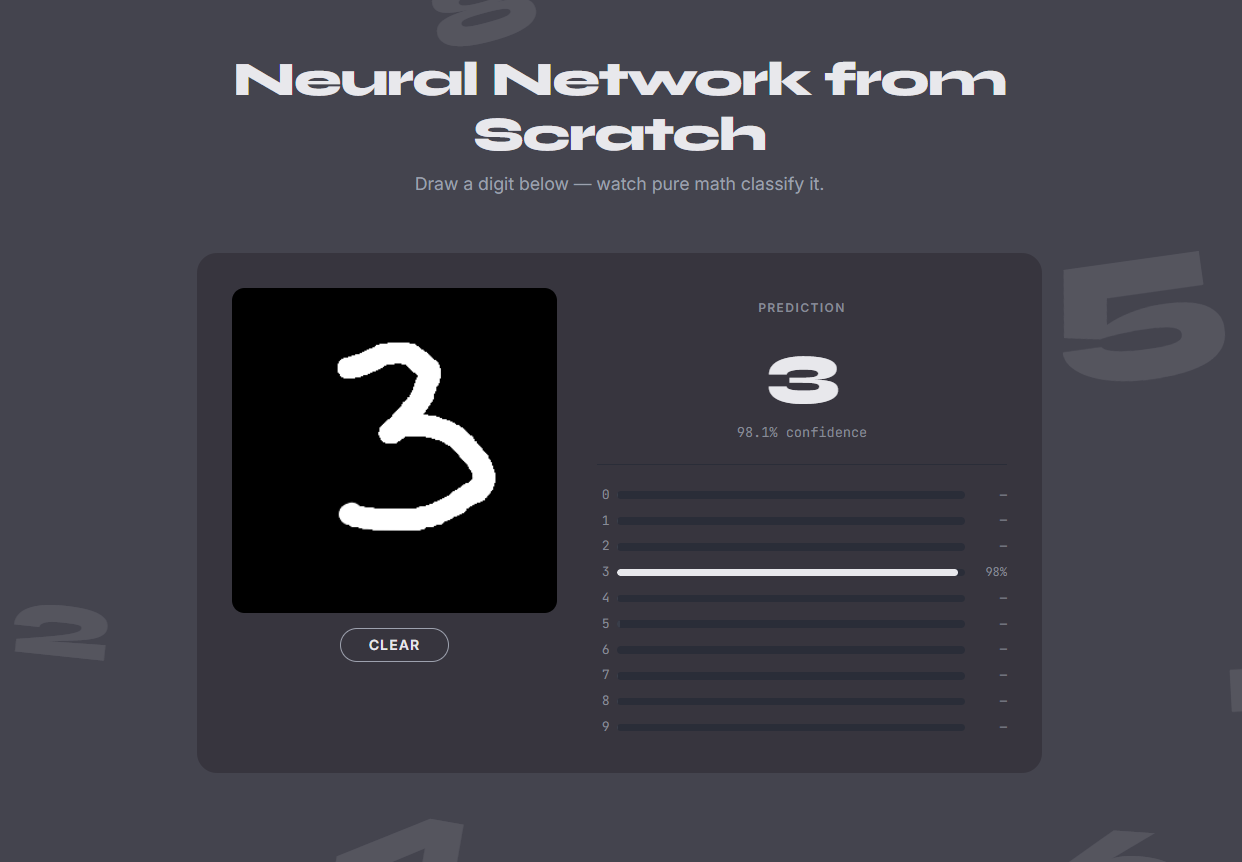
Built a 2-layer neural network from absolute zero — no PyTorch, no TensorFlow. Rediscovered backpropagation, softmax, and gradient descent by asking "why?" at every step. 95% accuracy on MNIST.
Building Systems that Think
Built a 2-layer neural network from absolute zero — no PyTorch, no TensorFlow. Rediscovered backpropagation, softmax, and gradient descent by asking "why?" at every step. 95% accuracy on MNIST.
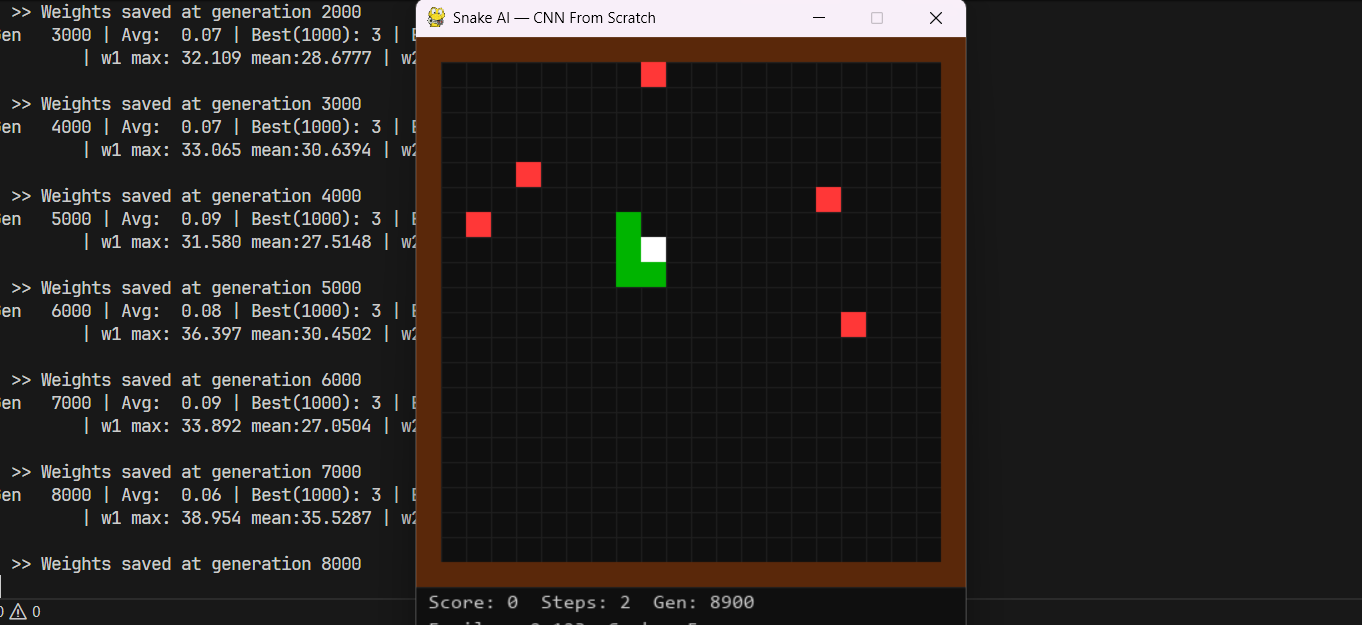
Taught a neural network to play Snake using deep Q-learning — no tutorials, no guides. I worked out the entire RL architecture myself: how to encode game state, design a reward system that doesn't cheat, balance exploration vs. exploitation, and fix stalled rewards where the snake just loops forever. Getting it to actually learn took a lot of iteration.
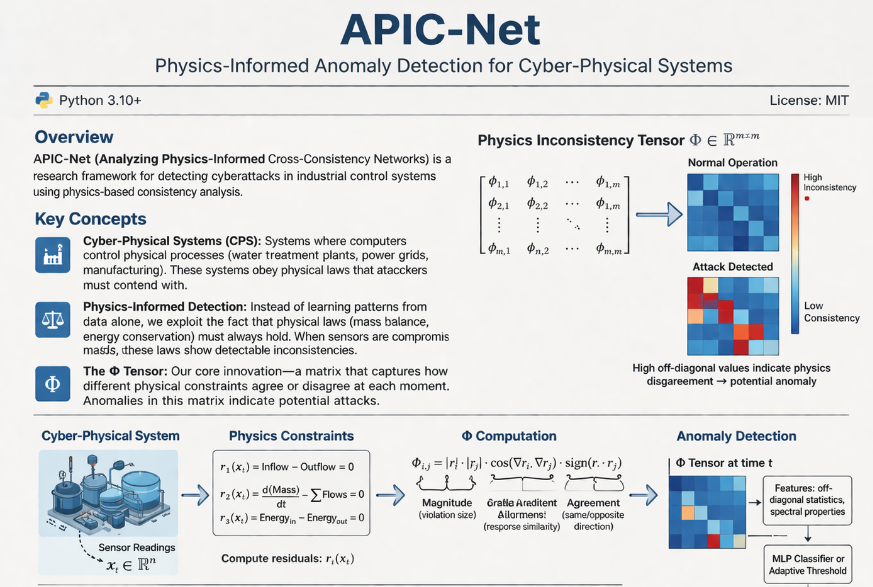
A research framework for detecting cyberattacks in industrial control systems — water treatment plants, power grids — by checking whether sensor readings violate physical laws. I built a Physics Inconsistency Tensor that captures when mass balance or energy conservation breaks down, which is usually a sign something's been tampered with. Tested on the SWaT dataset; turned up some genuinely surprising findings about when physics-informed features lose to raw sensors.
Built for the Kharagpur Data Science Hackathon — the task was checking whether a character's backstory contradicts a 100,000-word novel. I designed a multi-agent architecture inspired by how biological neurons compete: one agent looks for contradictions, another assumes consistency, and a supervisor arbitrates when they disagree. The architecture evolved through three full iterations before landing on something that actually worked. 70.9% accuracy across novels it had never seen.
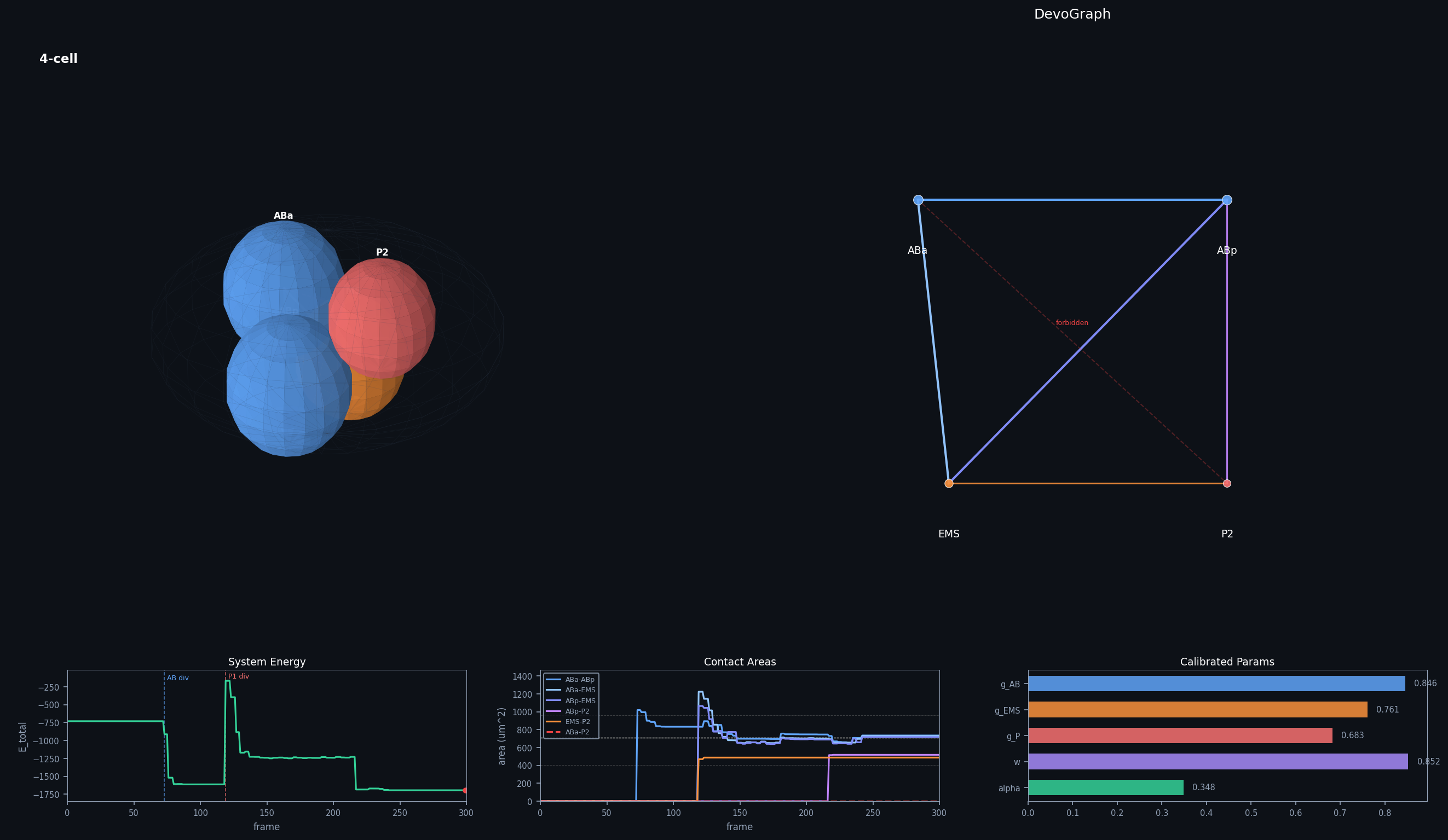
C. elegans early embryogenesis — from physics to discovered equations. Instead of prescribing a developmental graph and learning to characterize it, I let the graph emerge from a physics simulation: five energy terms, no hardcoded positions. The ABa-P2 contact that never forms in real embryos was never forbidden — the geometry just enforces it. SINDy then distills the simulation trajectories into symbolic laws: out of thirteen candidate terms, only cortical tension and neighbor count survived.